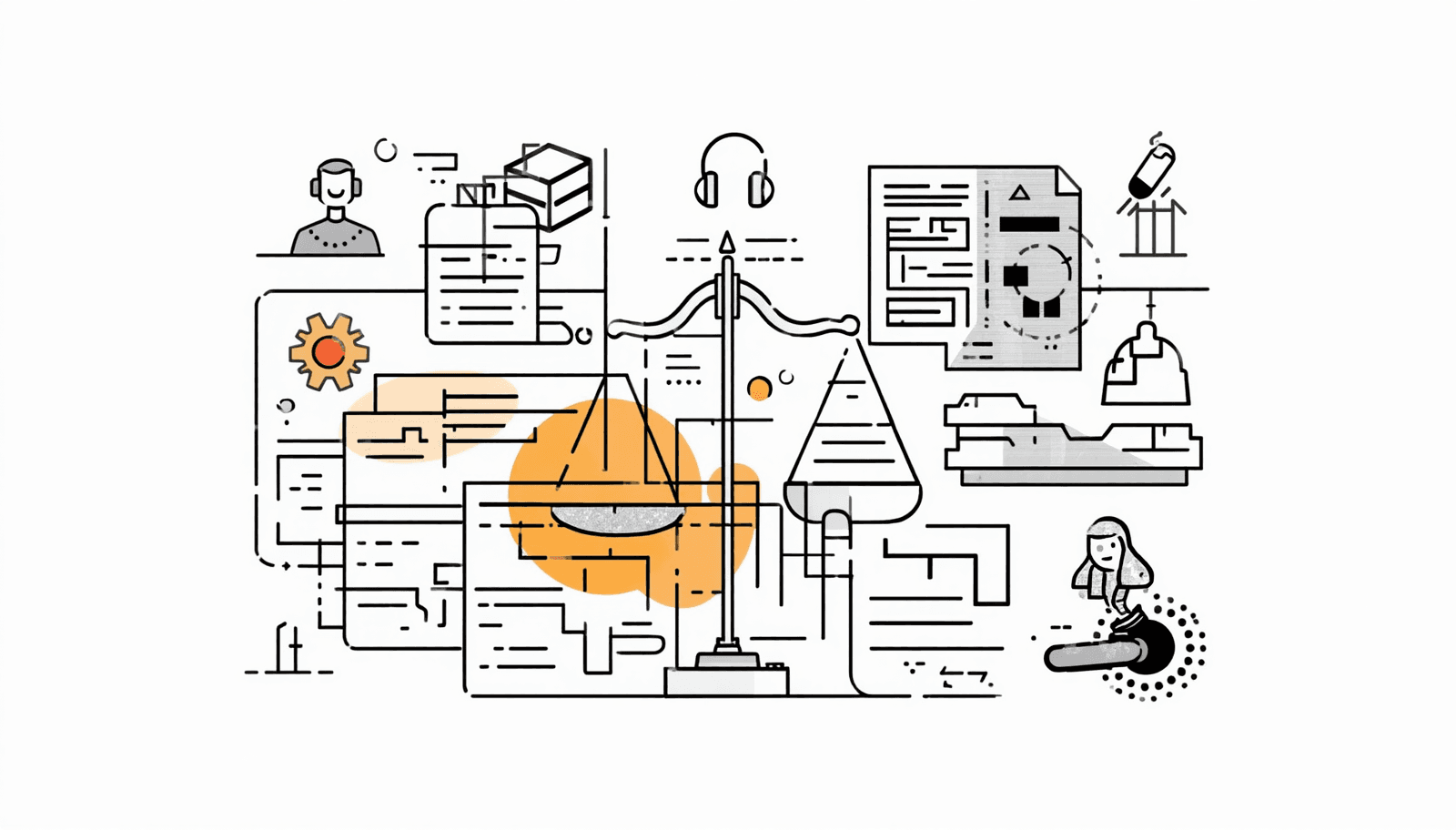
The Seniority Paradox: How AI Assistants are Redefining the Developer Career Path in 2026
AI assistants are fundamentally transforming software engineering careers. Explore how the rise of AI coding tools is creating new roles, changing hiring criteria, and reshaping the developer career ladder.
On this page+
- Introduction: The Death of the "Syntax Specialist"
- 1. The Disappearance of the "Entry-Level" Grind
- The Junior Hiring Cliff
- The New "Junior" Role: The Verification Engineer
- 2. The Rise of the "Product Engineer"
- What a Product Engineer Does
- 3. The "Skill Atrophy" Crisis: A Warning for 2026
- The Indicators of Atrophy
- How to Combat Atrophy
- 4. The 2026 Hiring Landscape: What Companies Want
- The Modern Interview Stack:
- 5. Legacy Code Archeology: The High-Paying Niche of the Future
- 6. Strategic Upskilling for 2027 and Beyond
- 7. Conclusion: The Promotion of the Software Engineer
Introduction: The Death of the "Syntax Specialist"
In 2024, a developer's value was often tied to their "Fluency" the ability to recall obscure library functions or write complex Regex from memory. In 2026, that skill is effectively zero-value. With AI assistants like Cursor and Windsurf capable of handling 99% of syntax-related tasks, the software engineering career ladder has been flipped upside down.
We are currently witnessing the Seniority Paradox: while AI has made it easier than ever to write code, it has made it exponentially harder to manage code at scale. This post is a comprehensive guide for developers at all levels to navigate the radical shifts in job descriptions, hiring criteria, and long-term career viability.
1. The Disappearance of the "Entry-Level" Grind
Historically, junior developers paid their dues by handling the "grind" — boilerplate code, unit testing, and basic bug fixes. This was the training ground where fundamental intuition was built.
The Junior Hiring Cliff
Recent 2026 data shows a 9–10% decline in junior hiring across major tech hubs, despite a 15% growth in total software roles. Why? Because an AI agent can perform the tasks of a 2024 junior developer for the cost of a $20/month subscription.
The New "Junior" Role: The Verification Engineer
If you are entering the field in 2026, you aren't being hired to write code. You are being hired to:
- Audit AI output: Proving that the agent's logic doesn't introduce subtle race conditions.
- Context Preparation: Gathering the documentation and legacy requirements needed for the agent to function.
- Edge-Case Hunting: Identifying where the AI's "happy path" logic fails.
2. The Rise of the "Product Engineer"
The most significant trend in 2026 is the convergence of Software Engineering and Product Management. As the cost of implementation approaches zero, the value of Problem Definition skyrockets.
What a Product Engineer Does
Unlike the traditional "Full-Stack Engineer" who focused on the layers of a tech stack, the Product Engineer focuses on the layers of the user experience.
- Direct Stakeholder Communication: They don't wait for a PRD (Product Requirements Document); they use AI to build prototypes during the discovery meeting.
- Outcome-Based Coding: They prompt based on KPIs (e.g., "Build a checkout flow that minimizes friction and handles partial refunds") rather than technical specs.
- Autonomous Maintenance: They manage agents that monitor user feedback and autonomously submit PRs to fix UI friction points.
3. The "Skill Atrophy" Crisis: A Warning for 2026
Over-reliance on assistants has created a new industry risk: Skill Atrophy. 88% of developers in 2026 report that AI-generated code often "looks correct but is unreliable" (often dubbed Hallucination Debt).
The Indicators of Atrophy
- Logic Blindness: Developers who can no longer debug without an AI's "Explain This" button.
- Architectural Fragility: Systems that work in isolation but fail when integrated because the developer didn't understand the underlying state management.
- Interview Failure: We are seeing a 40% failure rate in "Whiteboard Fundamental" interviews among developers with 3+ years of "AI-assisted" experience.
How to Combat Atrophy
To remain a high-tier engineer, you must implement "Cognitive Load Sessions":
- Manual Sprints: Dedicate one day a week to coding without any AI assistance to keep your mental models sharp.
- Code Descent: When an AI generates a solution, you must be able to explain why it chose that specific pattern over an alternative.
4. The 2026 Hiring Landscape: What Companies Want
The "Technical Interview" has been reinvented. LeetCode is dead; System Orchestration is the new standard.
The Modern Interview Stack:
- The "Agent Instruction" Test: Can you direct an AI to build a complex system while managing its constraints and costs?
- The Debugging Gauntlet: You are given 1,000 lines of "almost right" AI-generated code and 15 minutes to find the security flaw.
- The Business-to-Logic Translation: Can you take a vague business goal and break it into a logical architecture that an agentic team can execute?
5. Legacy Code Archeology: The High-Paying Niche of the Future
As AI creates massive amounts of code at record speeds, a new problem has emerged: AI-Spaghetti Code. Much of the code generated in the "AI Gold Rush" of 2024–2025 was poorly documented and tightly coupled.
In 2026, the highest-paid engineers are "Archeologists" specialists who use advanced AI to untangle, document, and modernize the massive piles of technical debt created by yesterday's AI prompts.
6. Strategic Upskilling for 2027 and Beyond
To move from a "Senior" to a "Principal" level in this environment, your learning path must shift:
- Focus on Distributed Systems: AI is good at functions; humans are still better at global state and complex distributed logic.
- Master the "Context Window": Learning how to index and "chunk" your company's proprietary knowledge for AI agents is the most valuable technical skill of 2026.
- Ethical & Secure AI Implementation: Becoming the "Security Guardrail" for your company's autonomous agents.
7. Conclusion: The Promotion of the Software Engineer
Software engineering isn't being automated away; it is being promoted to the executive suite. When you no longer have to worry about the semicolon, you are finally free to worry about the solution.
The developers who will thrive in the next decade are those who see themselves as System Architects and Product Founders. Use the AI as your hands, but never let it become your brain.