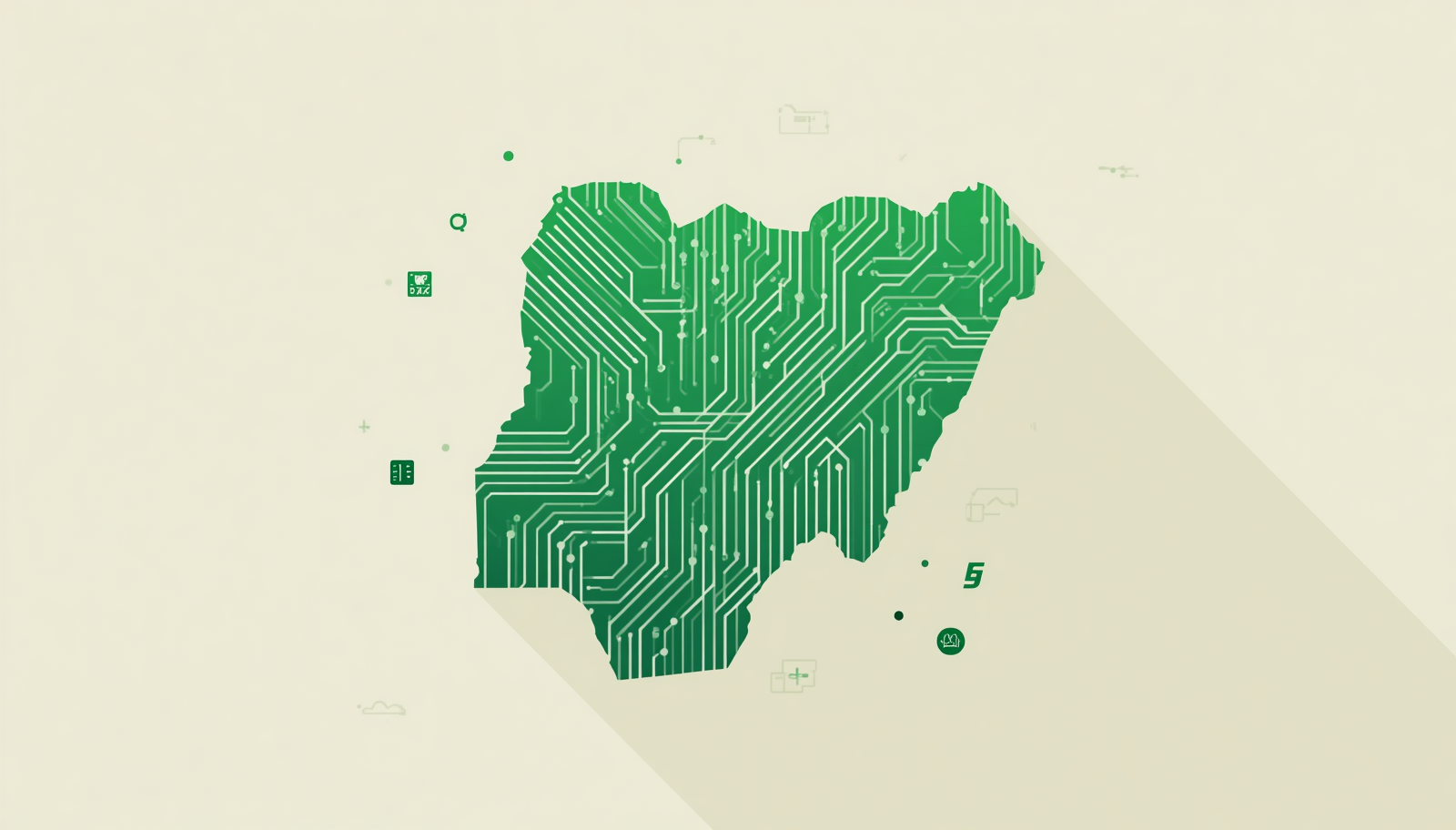
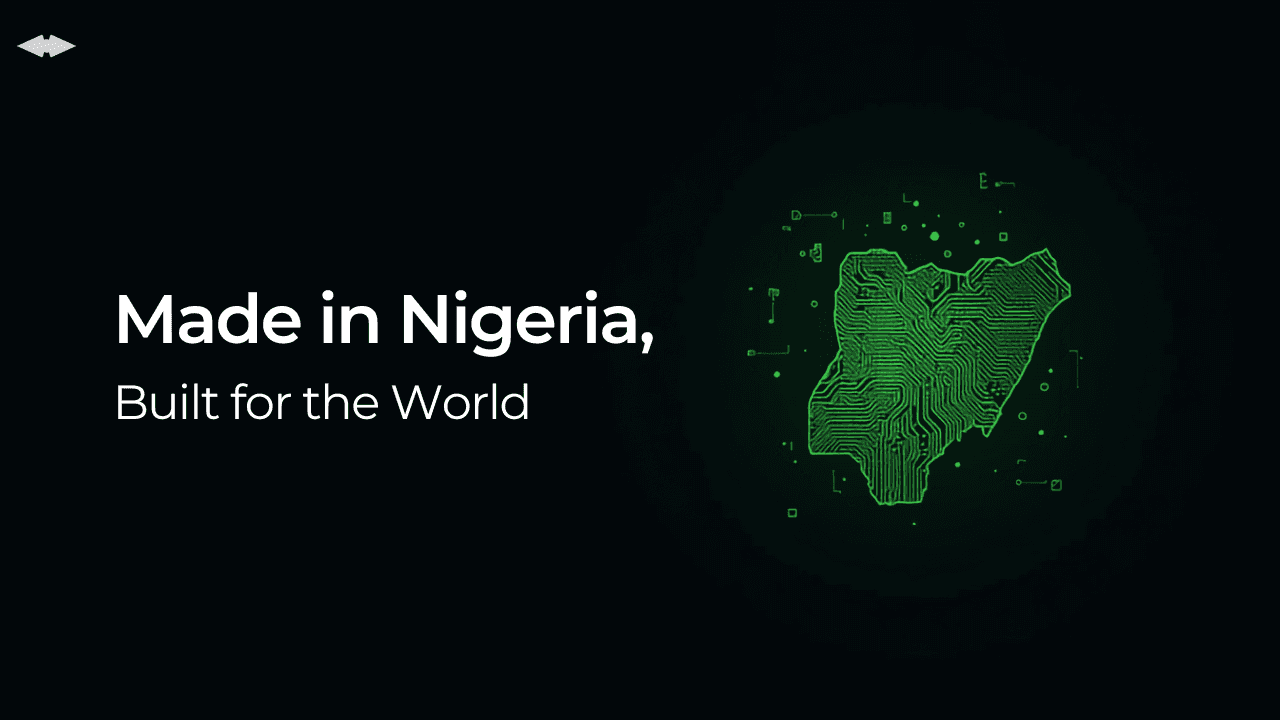
Made in Nigeria, Built for the World
Nigeria has more than 120 active AI startups, a government-backed multilingual model unveiled at the UN, and a growing wave of individual builders shipping real products, not just prompting someone else's model. But according to industry reporting, the pipeline behind that talent is still thin.
Nigeria's AI conversation has largely been about adoption, who's using ChatGPT, which bank rolled out a chatbot, which agency signed a partnership with a foreign vendor. Less visible, but arguably more consequential, is a smaller, faster-growing story running underneath it: Nigerians who are building the underlying AI systems themselves, training models, shipping products, and publishing research, rather than just wiring up interfaces on top of tools built elsewhere. That distinction, between using AI and building it, is the difference between renting a capability and owning it.
From Consumers to Creators
According to PM News Nigeria, Lagos now anchors more than 120 active AI startups nationwide, spanning healthtech, fintech, agritech, and language technology. That spread across sectors matters as much as the count itself: it suggests AI-building in Nigeria isn't concentrated in one hype-driven niche, it's showing up wherever a local problem is specific enough that an imported, generic tool doesn't quite fit. Nairametrics reports a parallel shift in research output: under the federally funded Nigerian Artificial Intelligence Research Scheme (NAIRS), the country published 20 peer-reviewed AI research papers in under two years, a deliberate push to build local research capacity rather than rely entirely on imported models. Research output and startup count are two different signals of the same underlying shift, one measures who's willing to fund and publish original work, the other measures who's willing to bet a company on it.
The Government-Backed Flagship: N-ATLAS
The clearest signal of state-level ambition is N-ATLAS, an open-source language model unveiled by Nigeria's Federal Ministry of Communications, Innovation and Digital Economy alongside the 80th UN General Assembly in September 2025, according to TechCabal and ThisDay. Built by Lagos-based Awarri in partnership with the National Centre for Artificial Intelligence and Robotics (NCAR), N-ATLAS can recognize, transcribe, and generate text in Yoruba, Hausa, Igbo, and Nigerian-accented English, an explicit bet that AI trained on Nigerian voices belongs to Nigeria, not just the labs training on global English. The choice to unveil it at the UN rather than a domestic press event is itself a signal, this was framed as a diplomatic and industrial statement, not just a product launch. A model that understands Nigerian-accented English and three major indigenous languages also isn't just a convenience feature, it's infrastructure: every voice assistant, transcription tool, or customer-service bot built on top of it inherits that capability for free, instead of every company having to solve the same accent and language gap independently.
The Startups Building for the World, Not Just Nigeria
Some of the sharpest examples aren't government projects at all. Decide, a three-person Nigerian startup with no external funding, ranked fourth globally on SpreadsheetBench, an international benchmark for AI spreadsheet agents, according to Techpoint Africa and Business Post Nigeria, behind agents built by far larger, well-funded teams. That ranking is notable precisely because benchmarks like this are typically dominated by well-capitalized labs with dedicated research teams, not three-person operations. Terra Industries, based in Abuja, builds AI-powered surveillance drones it now exports to eight African countries and Canada, per CNN's reporting, taking a hardware-plus-AI approach in a market where most Nigerian AI activity is software-only. Curacel applies AI to insurance claims processing and fraud detection for insurers across the continent, a narrower but commercially proven use case in a sector most consumer-facing AI coverage ignores entirely. Cencori, founded in June 2025 by Bola Banjo, Daniel Oreofe, and Ladipo Samuel, builds what its co-founder calls "the Cloudflare for AI production," a gateway that secures, routes, and monitors AI model requests for production applications, with automatic failover between providers like OpenAI, Anthropic, and Gemini, according to TechCabal. Bootstrapped and founder-led, it has grown past 200 users without paid marketing, competing directly with well-funded US infrastructure players. What ties these four together isn't sector, it's ambition of scope: none of them describe themselves as serving Nigeria, they describe themselves as serving whoever needs the problem solved, and Nigeria is simply where they happened to start.
The Grassroots Layer
Below the startups is a layer of individual builders, people without a company structure or outside funding, working essentially alone. Saheed Azeez created YarnGPT, a text-to-speech model that renders English and foreign-language text in Nigerian accents and at least four indigenous languages, the same language-access problem N-ATLAS tackles at the state level, but solved independently, at individual scale, without a ministry behind it. Data Science Nigeria announced free GPU access for Nigerian researchers, startups, and community workshops in June 2026, aimed squarely at people building at this smaller scale, an acknowledgment that the biggest obstacle facing this layer of builders isn't ambition or skill, it's simply getting access to the compute their ideas require.

The Caution: The Builders Are Here, the Pipeline Isn't
According to TechCabal's State of Tech in Africa report, corroborated independently by the UN Development Programme, fewer than 5% of African AI talent has access to the GPU power needed to build seriously. That figure is the practical explanation for why so much of the builder activity described above happens at hobbyist or bootstrapped scale rather than at the pace serious compute would allow, the constraint isn't who wants to build, it's who can get the hardware to do it. A World Bank survey of 174 African universities, also reported by TechCabal, found that only 31% offer dedicated AI programmes, meaning the pipeline of newly trained talent behind today's builders is thinner than the current momentum suggests. Africa still accounts for roughly 1% of global data center capacity, per TechCabal's analysis, forcing many builders to move data off the continent for processing before bringing solutions back to deploy locally, an added layer of cost, latency, and complexity that builders elsewhere simply don't have to plan around. Skilled engineers increasingly take remote roles with global firms paying in dollars, pulling talent away from the same local companies this builder wave depends on, which means every Cencori or Decide has to compete for its own engineers against companies that can pay in a stronger currency without even opening a Lagos office. The people are demonstrably here. Whether the infrastructure and retention economics catch up to them is the open question.
What This Means
Nigeria's AI story is quietly splitting into two tracks: a visible one built around adoption and consumption, and a less-covered one where Nigerians are training models, shipping global-grade products, and publishing original research. The government-backed N-ATLAS project and grassroots efforts like YarnGPT sit at opposite ends of the same movement, one institutional, one individual, both aimed at the same idea: that Nigerian voices, languages, and problems deserve AI built for them specifically, not adapted from somewhere else. The startups sitting between those two ends, Decide, Terra Industries, Curacel, and Cencori, are proof the approach can produce genuinely global-grade output, not just locally useful tools. The binding constraint isn't ambition or talent, per the available reporting, it's compute access, university pipelines, and whether local companies can compete with dollar-denominated remote salaries for the people they've just trained. Every piece of evidence in this story points the same direction: the people capable of building are already here, and what happens next depends entirely on whether the infrastructure around them catches up.
Sources
- TechCabal, What can you do with the Nigerian government's new AI model?
- Techpoint Africa, Three-person Nigerian startup cracks global AI rankings
- CNN, Terra Industries: The Nigerian startup manufacturing drones
- TechCabal, Meet the Nigerian startup trying to secure the age of vibe coding
- TechCabal, Africa's AI builders are already here. The pipeline isn't.